
Our Lens
Seeing Human Capacity Under Acceleration
Humans do not fail under change.
They strain when conditions exceed capacity.
Most systems do not register strain until it shows up as burnout, disengagement, or breakdown. By then, decisions are already locked and reversal is costly.
Our lens exists to make those limits visible earlier while options still exist.
Stabilization and aligned capacity are what make readiness possible.
Human Capacity Is Contexual
Human capacity is shaped by wiring, regulation, energy, processing, and connection. It is finite, contextual, and deeply influenced by environment.
When demands accumulate faster than humans can integrate them, people compensate. They push through. They appear functional long after capacity is already being depleted.
This is not a personal failing. It is a system signal.
Neurodiversity as Early Signal, Not Edge Case
“What overwhelms neurodivergent humans today often becomes widespread strain later as systems scale, accelerate, or compress timelines.”
Neurodivergent nervous systems often register environmental misalignment sooner.
That sensitivity is frequently framed as something to manage or accommodate. In reality, it functions as an early detection system for capacity limits.
When these early signals are understood, humans gain advance visibility into where conditions are misaligned, before strain becomes embedded.
Designing with this lens does not create special cases.
It improves decision quality by helping people see when demands are exceeding their capacity, while there is still room to slow down, adjust expectations, and choose differently.
This is not about inclusion as a value.
It is about using the most sensitive signal available to design change that can actually hold.
Why the Events Industry Sharpened This Lens
For two decades, the events industry functioned as a live testing ground for human systems under pressure.
Large-scale events compress months of coordination, decision-making, sensory input, and relational dynamics into days or hours. There is no buffer for misalignment.
When conditions exceed human capacity, the signal surfaces immediately, through overload, confusion, withdrawal, or breakdown.
Working inside these environments trained an early-signal lens that is difficult to develop elsewhere. In events, decisions about pacing, sequencing, design, and human experience must be right before momentum builds.
What becomes visible in moments of compression shows up wherever humans are asked to adapt faster than they can integrate.
The signal is the same.
The context changes.
The cost of missing it grows over time.
Acceleration Changes the Equation
AI did not create human strain. It made it visible.

Pace has increased across every part of life.
Decisions stack faster.
Transitions overlap.
Integration space shrinks.
What once unfolded gradually now arrives all at once.
What was once spread out is now felt simultaneously.
It is no longer enough to plan for change.
Humans need space to integrate it.
Without a human lens, exhaustion is mistaken for resistance.
Overload is mistaken for underperformance.
Withdrawal is mistaken for disengagement.
Native Intelligence Is Not Lost.
It is Blocked.
Humans already know how to regulate, think clearly, and adapt.
What is often missing are the conditions that allow that intelligence to come back online.
When environments are redesigned to align with human capacity, clarity returns. Decision quality improves. Adaptation becomes possible without constant override.
This is not about optimization or pushing harder.
It is about restoring access to what is already there.
The Fractal Pattern of Human Systems
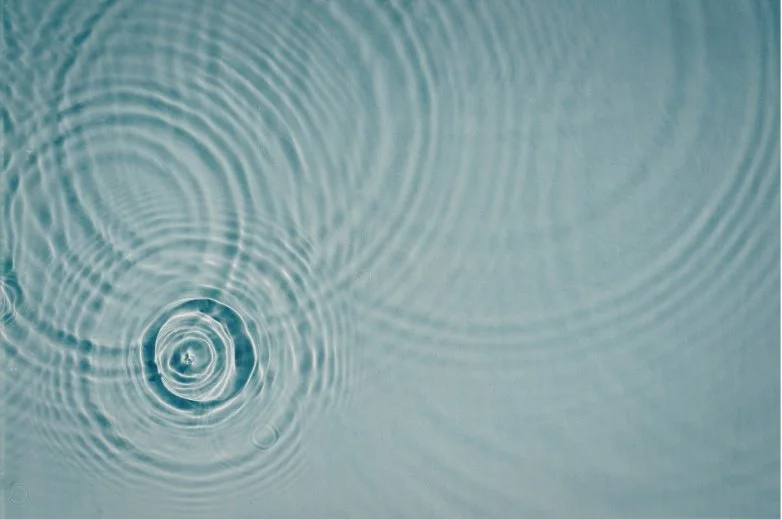
Human strain follows consistent patterns across scale.
The same capacity patterns repeat across individuals, families, teams, gatherings, organizations, and industries.
What changes is scale, not structure.
When conditions exceed human capacity, the signal shows up somewhere first. A child becomes dysregulated. A meeting derails. A team stalls. An organization experiences burnout or stalled adoption.
These are not separate problems. They are the same pattern expressing itself at different levels.
This is a fractal system. The human system behaves in consistent ways across contexts.
Small signals are not small because they are unimportant. They are early.
Strain is often misunderstood as situational or personal.
Seeing the pattern early preserves options and prevents cost from multiplying downstream.
From Lens to Application
This lens is not theoretical. It applies wherever humans are navigating pressure, complexity, and change.
Individuals and families
Strain shows up as overwhelm, dysregulation, masking, or exhaustion when everyday demands exceed what a nervous system can integrate.
Groups, gatherings, and shared spaces
The same strain appears as friction, confusion, withdrawal, escalation, or loss of trust, especially when expectations are compressed or unclear.
Work, learning, and leadership contexts
When early signals are missed, strain shows up later as burnout, disengagement, stalled momentum, or decisions made from depletion rather than clarity.
Life under acceleration
As pace increases, these patterns compress. Capacity limits surface sooner, often when options already feel narrow and people blame themselves for struggling.
The earlier strain becomes visible, the more room there is to respond with care, clarity, and integrity.
This is why readiness matters.
Not for performance, but for staying human while meeting what life is asking.
Closing
This work is not about predicting the future.
It is about learning to read the present more accurately.
When invisible strain becomes visible early:
People regain options
Decisions feel clearer
Change becomes something humans can meet without self-blame or chronic override
This is not about fixing people.
It is about restoring the conditions that allow human intelligence to operate.
That is the work of NeuroSpark+.